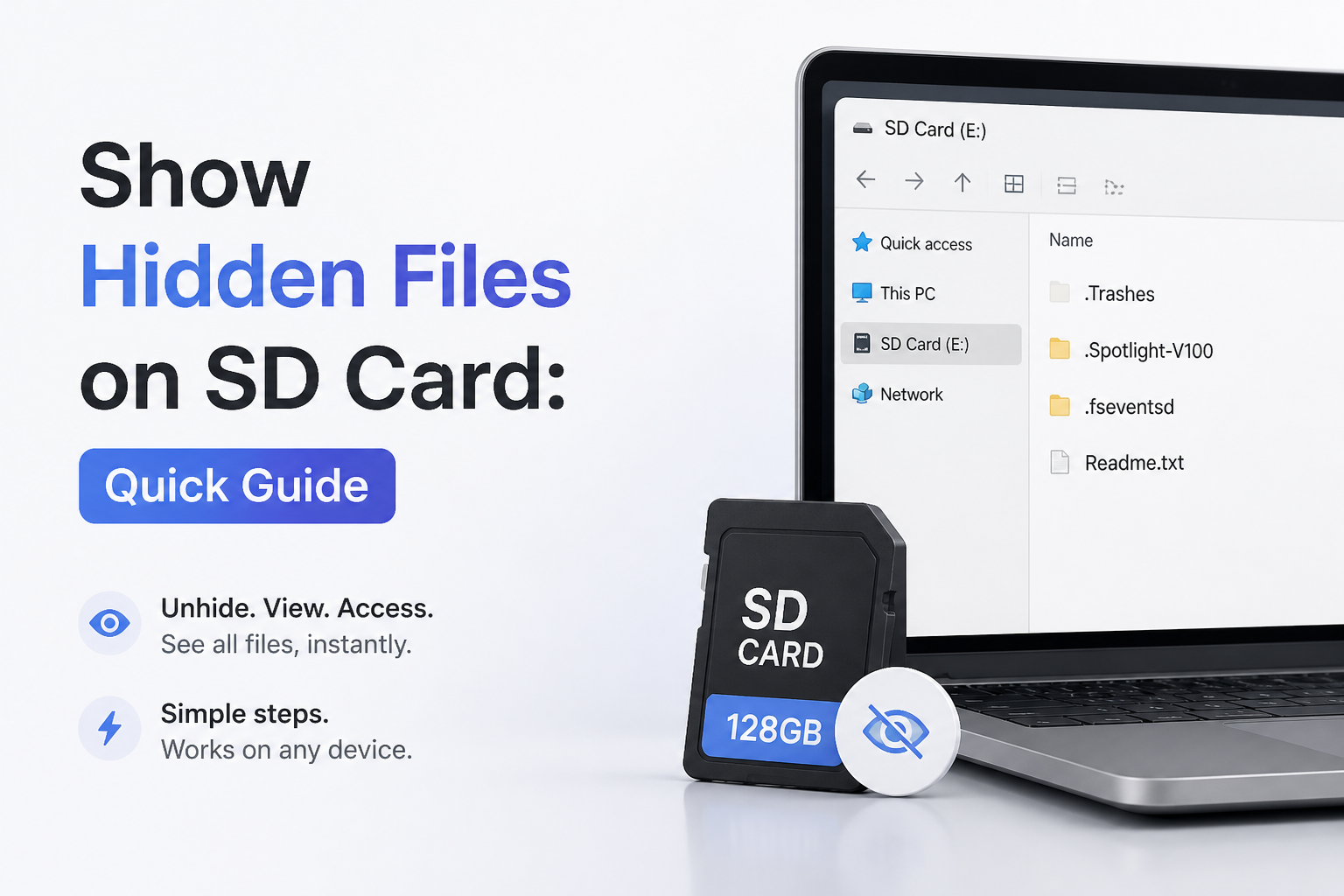
Show Hidden Files on SD Card: Quick Guide
Your files may be hidden rather than erased. Try the simple visibility switch first, then move to attribute repair or recovery if the card still looks empty.
On Windows, open the SD card in File Explorer, then turn on View › Show › Hidden items. On a Mac, press
Command + Shift + .
in Finder. If neither reveals the files, stop using the card before trying attribute repair or a Disk Drill scan.
Do not format the SD card or save new files to it if the missing data matters. New writes may overwrite deleted content that recovery software could otherwise find.
Recover Files That Are No Longer Hidden → Disk Drill
Scans SD cards for deleted or lost photos, documents, plus video · Offers previews before recovery · Windows or macOS
When Not to Keep Troubleshooting an SD Card at Home
Stop if the card repeatedly disconnects, becomes unusually hot, appears with the wrong capacity, or vanishes from Disk Management or Disk Utility. Those symptoms can point to hardware failure rather than hidden attributes.
For irreplaceable work, family photos, or client footage, repeated scans may be a poor gamble. Disconnect the card, store it safely, then ask a reputable recovery lab for an assessment.
Choose the Right Way to Show Hidden Files on an SD Card
Begin with the method matching the device where you opened the card.
| Method | Best for | Time | Success rate |
|---|---|---|---|
| 1. Show Hidden Files in Windows File Explorer TRY FIRST | Normally working cards on Windows | ~1 min | ● 95% |
| 2. Remove Hidden Attributes With Command Prompt | Whole folders marked hidden or system | ~3 min | ● 82% |
| 3. Reveal Hidden SD Card Files in Finder | Hidden content viewed on a Mac | ~1 min | ● 94% |
| 4. Enable Hidden Files on an Android Device | microSD cards inside phones or tablets | ~2 min | ● 85% |
| 5. Scan the SD Card With Disk Drill | Deleted, formatted, or inaccessible files | ~15 min | ● 68% |
Top 5 Ways to Show Hidden Files on an SD Card

05 Scan the SD Card With Disk Drill
Use recovery software when visibility settings reveal nothing
~15 min
Scan the SD Card With Disk Drill
Use recovery software when visibility settings reveal nothing
If the files were deleted, lost after formatting, or disconnected from a damaged file system, they are not simply hidden. Disk Drill can scan the card for recoverable content, including photos plus video.
- Stop using the SD card so new data does not overwrite the missing files.
- Connect the card directly to the computer through a stable card reader.
- Open Disk Drill, select the physical SD card, then start Search for lost data.
- Review the scan results. Use file-type filters, search, or previews to narrow the list.
- Select the files you need, click Recover, then save them to the computer or another drive, never back onto the same SD card.
Which SD Card Method Should You Try?
Start with the visibility setting for your operating system because it is quick, free, plus harmless when the card opens normally. Use Command Prompt if Windows shows an empty card despite occupied storage. If the content remains missing or the card was formatted, stop writing to it, then scan it with Disk Drill or consult a recovery lab when the hardware behaves erratically.
Copy recovered or newly revealed files to another drive before repairing, formatting, or reusing the SD card.
Common Questions About Hidden SD Card Files
Why are my SD card files hidden?
How do I show hidden files on an SD card in Windows 11?
How do I view hidden SD card files in Windows 10?
What command reveals hidden SD card files?
attrib -h -s /s /d E:\*.*
in Command Prompt, replacing E with the correct card letter. Verify that letter carefully before pressing Enter.How do I show hidden files from an SD card on a Mac?
Command + Shift + .
. Press the shortcut again to hide those items later.